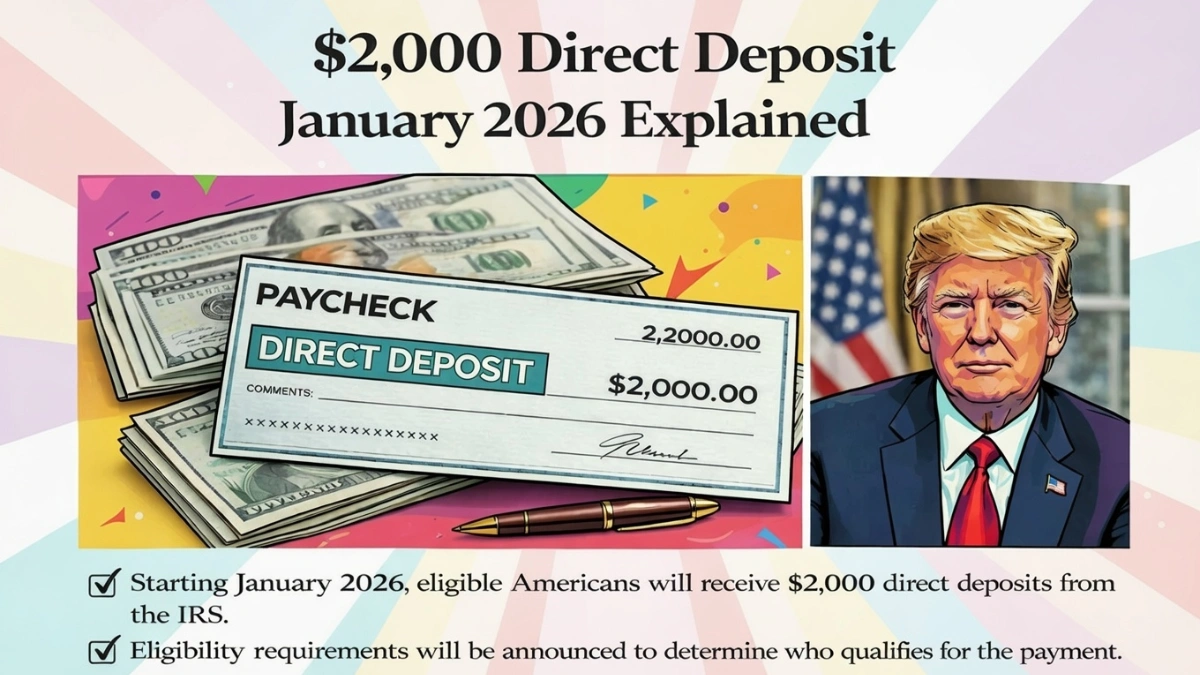
Claims about a $2,000 direct deposit for U.S. citizens in January 2026 are spreading fast, but the full story is more nuanced. The payment is not a universal benefit for all Americans. Instead, it refers to eligible IRS-issued payments, such as tax refunds, refundable credits, or approved account adjustments that may total around $2,000 for some individuals.
Below is a clear, verified guide based on how the system actually works.
What the $2,000 IRS Direct Deposit Really Is
The $2,000 amount is not a new stimulus check and not an automatic payment for every citizen. It represents tax-related deposits processed during the January 2026 cycle. These may include income tax refunds, refundable tax credits, or corrections approved after IRS review.
All such payments are issued by the Internal Revenue Service through standard federal procedures.
Who Is Eligible for the January 2026 Payment
Eligibility is determined individually. You may qualify if you filed an accurate tax return, had refundable credits approved, overpaid taxes, or received an IRS adjustment. Income thresholds, filing status, credit phaseouts, and verification checks all affect eligibility.
Some U.S. citizens may receive the full $2,000, others a smaller amount, and many may not receive any payment if no refund or adjustment is due.
January 2026 Payment Dates and Timeline
IRS payments are issued in batches, not on one single date. For January 2026, direct deposits are expected to begin mid-January and continue through late January, depending on processing status and banking timelines. Direct deposit is generally faster than mailed checks.
Paper checks, if issued, usually arrive later due to postal delivery times.
How the Payment Will Be Sent
Most eligible recipients will receive funds via direct deposit to the bank account listed on their tax return. In some cases, payments may be sent as paper checks or prepaid debit cards. Every legitimate payment is tied to IRS documentation and can be verified through official IRS tools.
Why Many U.S. Citizens Will Not Receive $2,000
Not receiving a payment does not automatically indicate an error. Common reasons include income exceeding eligibility limits, no refundable credits claimed, correct withholding resulting in no refund, offsets for outstanding federal debts, or returns under IRS review.
Each case is calculated based on federal tax rules.
IRS Instructions to Avoid Delays
To reduce delays, ensure your bank information is accurate, respond promptly to IRS notices, file electronically when applicable, and review your IRS account transcript for updates. Even small filing errors can delay or reduce payments.
Beware of Misinformation and Scams
There is no guaranteed $2,000 direct deposit for all U.S. citizens in January 2026. The IRS does not contact taxpayers via social media or request PINs, passwords, or one-time codes. Messages promising automatic payments for everyone should be treated with caution.
Conclusion: The $2,000 direct deposit in January 2026 is real for eligible U.S. citizens, but it is conditional, not universal. It reflects standard IRS refunds or approved adjustments, not a new nationwide payment program. Understanding eligibility rules and timelines is the best way to avoid confusion and unrealistic expectations.
Disclaimer: This article is for informational purposes only and does not constitute tax or financial advice. Eligibility, payment amounts, and schedules vary by individual case and are subject to official IRS rules. Always rely on official IRS communications or consult a qualified tax professional for personalized guidance.